
Tim’s Tax News on the Tenth – March 2025
IRS Releases its List of Dirty Dozen Tax Scams for 2025
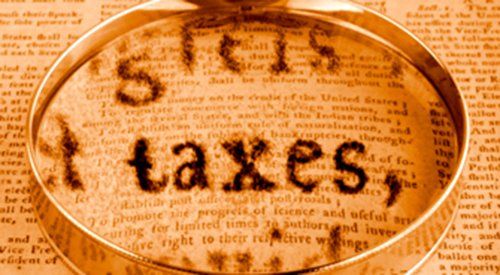
The IRS recently published its yearly list of the most prevalent tax scams known as its Dirty Dozen. The list is obviously not exhaustive but an attempt to warn taxpayers of trends seen by the IRS. The IRS list of tax scams for 2025 came with a warning for taxpayers, businesses, and tax professionals to watch out for common schemes that threaten their tax and financial information.
Ranging from email schemes to misleading tax credits, many of the Dirty Dozen items peak during filing season as people prepare their tax returns. In reality, these scams can occur throughout the year as fraudsters look for ways to steal money, personal information, and data.
“Scammers are relentless, and they use the guise of tax season to try tricking taxpayers into falling into a variety of traps. These red flags can lead to everything from identity theft to being misled into claiming tax credits for which they’re not entitled,” said Terry Lemons, IRS communications senior adviser. “For more than two decades, the IRS has highlighted the Dirty Dozen through far-reaching communications and education campaigns as part of a wider effort by the agency to protect taxpayers from being scammed.”
1. Email phishing scams: The IRS continues to see a barrage of email and text scams targeting taxpayers and others. Taxpayers and tax professionals should be on alert to fake communications from entities posing as legitimate organizations in the tax and financial community, including the IRS, state tax agencies, and tax software companies. These messages arrive in the form of unsolicited texts or emails to lure unsuspecting victims into providing valuable personal and financial information that can lead to identity theft. There are two main types:
- Phishing: An email sent by fraudsters claiming to come from the IRS. The email lures the victims into the scam with a variety of ruses such as enticing victims with a phony tax refund or threatening them with false legal or criminal charges for tax fraud.
- Smishing: A text or smartphone SMS message where scammers often use alarming language such as, "Your account has now been put on hold," or "Unusual Activity Report," with a bogus "Solutions" link to restore the recipient's account. The promise of unexpected tax refunds is another potential tactic used by scam artists.
As a reminder, never click on any unsolicited communication claiming to be from the IRS as it may surreptitiously load malware. This may also be a way for malicious hackers to load ransomware that keeps the legitimate user from accessing their system and files.
2. Bad social media advice: Another growing concern in 2025 continues to involve incorrect tax information on social media that can mislead honest taxpayers with bad advice, potentially leading to identity theft and tax problems. Social media platforms routinely circulate inaccurate or misleading tax information, including on TikTok where people share wildly inaccurate tax advice. Some involve urging people to misuse common tax documents like Form W-2.
The IRS warn people not to fall for these scams and urge them to follow trusted social media advice from the IRS, tax professionals, and other reputable sources. The IRS reminds taxpayers who knowingly file fraudulent tax returns that they could potentially face significant civil and criminal penalties.
3. IRS Individual Online Account help from scammers: Swindlers can pose as a "helpful" third party and offer to help create a taxpayer's IRS Individual Online Account at IRS.gov. In reality, no help is needed, and the agency offers tips on how to sign up and avoid scams. The IRS Individual Online Account provides taxpayers with valuable personal tax information. But watch out: Third parties making these offers will try to steal a taxpayer's personal information and try to submit fraudulent tax returns in the victim's name to get a big refund.
4. Fake charities: Bogus charities are a perennial problem that can intensify whenever a crisis or natural disaster strikes. Scammers set up these fake organizations to take advantage of the public's generosity. They seek money and personal information, which can be used to further exploit victims through identity theft.
Taxpayers who give money or goods to a charity might be able to claim a deduction on their federal tax return if they itemize deductions, but charitable donations only count if they go to a qualified tax-exempt organization recognized by the IRS.
5. False Fuel Tax Credit claims: A major concern during the past year involved taxpayers who were misled into believing they were eligible for the Fuel Tax Credit. The credit is meant for off-highway business and farming use and is not available to most taxpayers. However, unscrupulous tax return preparers and promoters, including people on social media, continue enticing taxpayers into inflating their refunds by erroneously claiming the credit. The IRS has seen an increase in the promotion of filing certain refundable credits using Form 4136. The IRS urges people to get more information and ensure they are properly claiming this credit.
6. Credits for Sick Leave and Family Leave: This specialized credit is available for self-employed individuals for 2020 and 2021 during the pandemic; the credit is not available for later tax years. The IRS is seeing repeated instances where taxpayers are using Form 7202, Credits for Sick Leave and Family Leave for Certain Self-Employed Individuals, to incorrectly claim a credit based on income earned as an employee and not as a self-employed individual.
7. Bogus self-employment tax credit: Social media advice continues to circulate about a non-existent “Self-Employment Tax Credit” that’s misleading taxpayers into filing false claims. Promoters market it as a way for self-employed people and gig workers to get big payments for the COVID-19 pandemic period. Similar to misleading marketing around the Employee Retention Credit, there is inaccurate information being circulated that suggests many people qualify for the tax credit and payments of up to $32,000 when they actually do not.
In reality, the underlying credit being referred to in social media is not called the “Self-Employment Tax Credit,” it’s a much more limited and technical credit called the Credits for Sick Leave and Family Leave. Many people simply do not qualify for these credits, and the IRS is closely reviewing claims coming in under this provision, so taxpayers filing claims do so at their own risk.
8. Improper household employment taxes: Taxpayers “invent” fictional household employees and then file Schedule H (Form 1040), Household Employment Taxes, to claim a refund based on false sick and family medical leave wages they never paid.
9. The overstated withholding scam: This is a recent scheme circulating on social media encouraging people to fill out Form W-2, Wage and Tax Statement, or other forms like Form 1099-NEC and other 1099s with false income and withholding information.
In this overstated withholding scheme, scam artists suggest people make up large income and withholding amounts as well as the fictional employer supplying those amounts. Scam artists then instruct people to file the bogus tax return electronically in hopes of getting a substantial refund due to the large amount of fraudulent withholding.
If the IRS cannot verify the wages, income, or withholding credits entered on the tax return, the tax refund will be held pending further review. Taxpayers should always file a complete and accurate tax return. They should only use legitimate information returns, such as an employer-issued Form W-2, to complete returns correctly.
There are multiple variations of the overstated withholding credit scheme, including those involving Forms W-2 and W-2G; Forms 1099-R, 1099-NEC, 1099-DIV, 1099-OID, and 1099-B; as well as the Alaskan Dividend Fund, Schedule K-1 with Withholding Reported, and Unspecified Source of Withholding Credit Claimed.
10. Misleading Offers in Compromise: The Offers in Compromise (OIC) program is an important program that helps people settle their federal tax debts when they are unable to pay in full. But "mills" can aggressively promote Offers in Compromise in misleading ways to people who clearly don't meet the qualifications, frequently costing taxpayers thousands of dollars. A taxpayer can check their eligibility for free using the IRS Offer in Compromise Pre-Qualifier tool.
11. Ghost tax return preparers: Most tax preparers provide outstanding and professional service. However, people should be careful of shady tax professionals and watch for common warning signs, including charging a fee based on the size of the refund. A major red flag or bad sign is when the tax preparer is unwilling to sign the return. Avoid these "ghost" preparers, who will prepare a tax return but refuse to sign or include their IRS Preparer Tax Identification Number (PTIN) as required by law. Taxpayers should never sign a blank or incomplete return. Instead, the IRS reminds taxpayers to turn to a trusted tax professional for help.
12. New client scams and spear phishing: In 2025, the IRS continues to see the "new client" scam, which involves spear phishing attempts that target tax pros. Cybercriminals impersonate new, potential clients to trick tax professionals and other businesses into responding to their emails. Once the tax pro responds, the scammer sends a malicious attachment or URL that can compromise the preparer's computer systems and allow the attacker to access sensitive client information.
Phishing is a term given to emails or text messages designed to get users to provide personal information, and spear phishing is a phishing attempt tailored to a specific organization or business. Tax professionals frequently find themselves a target of this type of scam. Spear phishing holds greater potential for harm because a successful spear phishing attack can ultimately steal client data and the tax pro’s identity, allowing the thief to file fraudulent returns using the stolen information.
Businesses and individuals, including tax pros, should always be cautious and look out for any suspicious requests or unusual behavior before sharing any sensitive information or responding to an email. Warning signs include poorly constructed sentences and unusual word choices. Be aware that by gaining access to a hacked email account, scammers can locate a genuine email from a previous victim's email account sent to their tax professional.
If you would like more details, please do not hesitate to call our office. Our office has been successful in helping taxpayers with IRS and IDOR collection problems for over 31 years. If you have a tax or debt problem, please contact me at 847-705-9698 or thughes@lavellelaw.com and find out how we can help you.
Are you receiving the Lavelle Law eNewsletter? Sign up today and receive valuable updates and perspectives on a wide range of legal issues: http://goo.gl/pjeJkm
More News & Resources
Lavelle Law News and Events