

COBRA Coverage Explained: What Employees and Employers Need to Know
James P. Berg • April 27, 2026


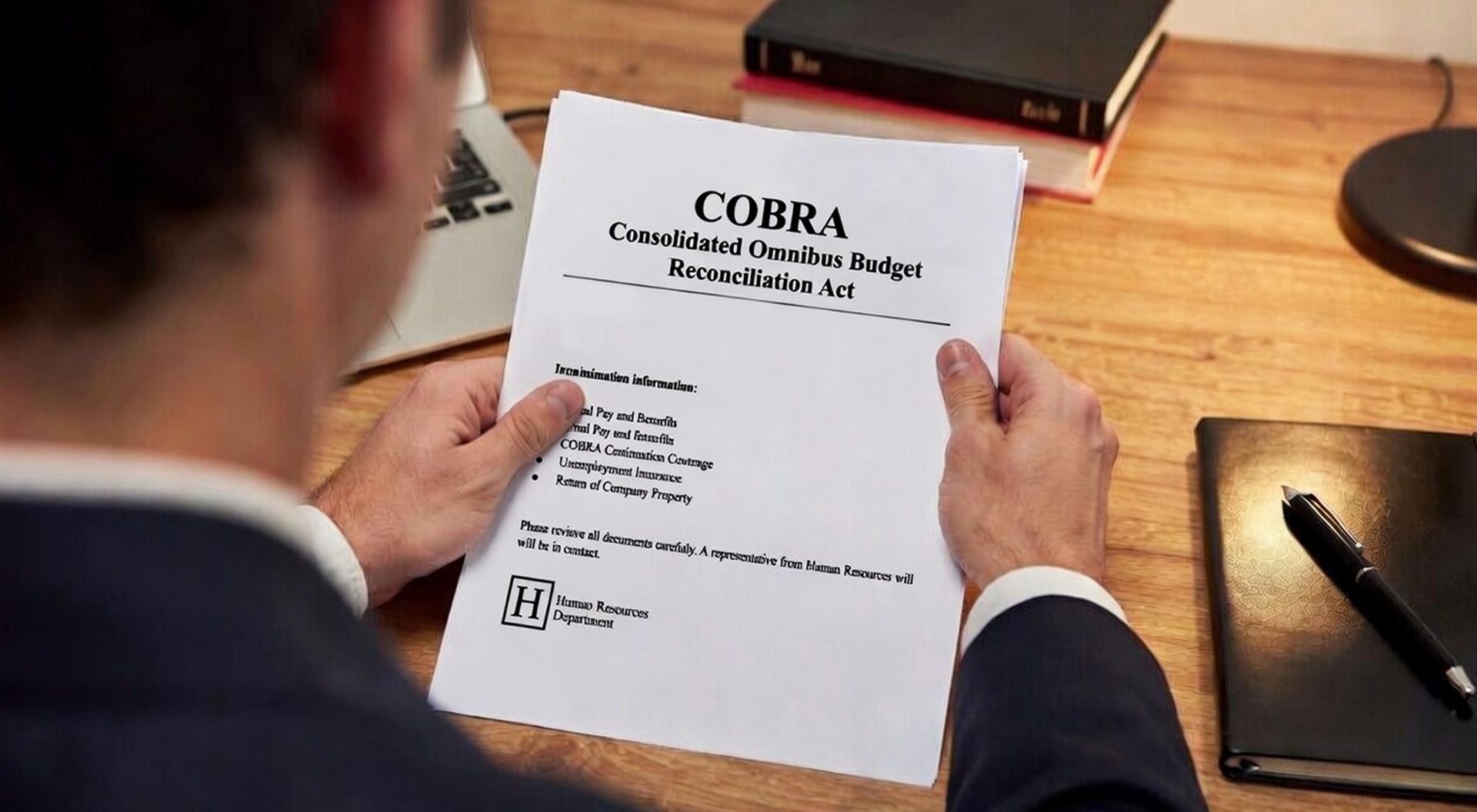
Losing a job or experiencing a change in employment status can be stressful, particularly when it impacts health insurance coverage. The Consolidated Omnibus Budget Reconciliation Act (“COBRA”) provides a critical safety net by allowing employees and their families to continue employer-sponsored health coverage under certain circumstances.


What Plans Are Covered by COBRA?


COBRA applies to group health plans sponsored by:

  • Private-sector employers; and
  • State and local government employers


To qualify, the employer must have at least 20 employees on more than 50% of its typical business days during the prior calendar year. If this threshold is met and the employer offers a group health plan, COBRA likely applies.


Step 1: What is a “Qualifying Event”?


COBRA coverage is triggered by a qualifying event, a specific change in circumstances that would otherwise cause a loss of health coverage.


For Employees

A qualifying event includes:

  • Termination of employment (for any reason other than “gross misconduct”), or
  • Reduction in hours


These events generally entitle the employee to up to 18 months of continued coverage.


For Spouses & Dependent Children

Additional qualifying events include:

  • Termination or reduction in hours of the employee
  • The employee becoming entitled to Medicare
  • Divorce or legal separation
  • Death of the employee


For Dependent Children

  • Loss of dependent status under the plan (e.g., aging out at age 26 under the Affordable Care Act)


Step 2: Notice of the Qualifying Event


COBRA is a notice-driven statute, meaning rights are triggered only after proper notice is provided.

  • The employer must notify the plan within 30 days if the qualifying event is:
  • Termination or reduction in hours
  • Death of the employee
  • Medicare eligibility
  • Employer bankruptcy
  • The employee or qualified beneficiary must notify the plan if the event is:
  • Divorce or legal separation
  • Loss of dependent child status


Importantly, the plan has no obligation to act until it receives proper notice.


Step 3: COBRA Election Notice


Once the plan receives notice of a qualifying event, it must send a COBRA Election Notice within 14 days.

This notice must clearly explain:

  • The right to continue coverage
  • How to elect COBRA
  • Deadlines and costs
  • Contact information for the plan administrator


If coverage is denied, the plan must issue a written notice of unavailability within 14 days, explaining the reason for denial.


Step 4: Electing COBRA Coverage


After receiving the election notice, the individual has at least 60 days to decide whether to elect COBRA coverage.


The 60-day period runs from the later of:

  • The date the election notice is provided; or
  • The date coverage would otherwise be lost


If elected, coverage is typically retroactive to the date of loss, ensuring no gap in insurance.


Documentation Matters


COBRA rights and procedures must be outlined in the plan’s Summary Plan Description (SPD), a written document employers are required to provide to participants. Both employers and employees should be familiar with this document, as it governs how COBRA operates in practice.


If you have questions regarding COBRA rights and procedures, contact James Berg at jberg@lavellelaw.com or 312-888-4115 to schedule a consultation. 

More News & Resources

Lavelle Law News and Events

So, You Want to Run for Office?
Meeting the Basic Eligibility Requirements is the First Step
By Annette K. Corrigan June 5, 2026
Before you print a single petition or launch a campaign website, the first and most important question is this: Am I eligible to run for this office? In Illinois, failing to meet the basic eligibility requirements can disqualify a candidate before the race even begins. Understand the rules upfront.
“Entrepreneurial Boot Camp” outlines key legal and structural decisions every founder should know.
By Theodore M. McGinn and Frank J. Portera May 27, 2026
This Lavelle Law Breakfast Briefs seminar highlighted actionable insights to protect and position your business for success, including: business entity selection; capital structure; key contract terms; and shareholder and operating agreements.
Disregarding clear obligations in a court-approved parenting agreement led to costly consequences.
By Domestic Relations / Family Law May 26, 2026
As a result of our efforts, the court reduced our client’s child support arrearage by half because of the mother’s intentional and prolonged refusal to provide her share of transportation costs. The court also ordered the mother to pay a substantial portion of the father’s attorney’s fees.
A Guide to Preparing and Completing the Dreaded Financial Affidavit  in Illinois Divorce Cases
By Annette K. Corrigan May 22, 2026
Anyone going through a divorce in Illinois is required to complete a financial affidavit as part of the legal process. Each spouse completes their own financial affidavit, utilizing all financial records and information available to them. Follow this step-by-step guide to streamline the process and avoid costly errors.
How to Run as a Write-In Candidate in Illinois
By Annette K. Corrigan May 21, 2026
Write-in candidates are a unique feature of Illinois elections. They allow qualified individuals to run for office without appearing on the printed ballot. While this option provides flexibility, it comes with strict procedural requirements under the Illinois Election Code.
Important Update for Auto Dealers: FTC Cracks Down on Advertising Practices.
By Sarah J. Reusché May 15, 2026
On March 13, 2026, the Federal Trade Commission sent warning letters to 97 dealerships nationwide concerning their advertising practices. This article addresses the practical implications of the FTC’s stance on dealer advertising and what dealers need to know to remain in compliance.
IRS Announces New Option for Taxpayers to Request More Time After ERC Claim Disallowance
By Timothy M. Hughes May 10, 2026
The Internal Revenue Service recently announced a new, streamlined way for taxpayers to extend the period of time for the IRS and the IRS Independent Office of Appeals to review a taxpayer’s response to a disallowance of an Employee Retention Credit (“ERC”) claim to avoid refund litigation.
High-level insight into sophisticated tax-deferral strategies tailored for business owners
By Kerry M. Lavelle May 4, 2026
Kerry Lavelle explains how business owners can access tax-deferred money, highlighting two selective strategies for key employees or management: Deferred Compensation Plans and Cash Balance Plans. Both allow business owners and key team members to earn money while deferring taxes.
Success Story - Strategic Defense in Probate Property Dispute
By Probate Litigation April 27, 2026
In a contentious probate matter involving a disputed deed to residential property, our client, the administrator of the estate, seeks to recover assets after the deed was recorded by the decedent’s neighbor.
Major life events, shifts in financial status, and changes in the law can affect your estate plan.
By Heather A. McCollum and Gabriel P. Kokoszka April 14, 2026
Major life events, shifts in financial status, and changes in the applicable law can all affect your estate plan, and those changes may require you to make some edits to your documents. So, this spring, dust off your estate plan and consider the following 8 circumstances that signal an update is needed.
More Posts