
Bankruptcy Protection for Businesses and How to Avoid it – A Lavelle Law Breakfast Briefs Webinar
Lavelle Law • June 24, 2020
Faced with a loss of income, businesses are being harassed by creditors for payment. Bankruptcy protection can provide your business with time and keep those creditors from disrupting your business. And in other cases, with the right attorney, you may be able to avoid bankruptcy altogether. In this webinar, the attorneys with Lavelle Law discuss the basics in the filing of a bankruptcy petition, the benefits and drawbacks, and other strategic uses. They will also discuss how a reorganization can save your business. Finally, they will discuss strategies to avoid the filing of a bankruptcy altogether and settle with creditors in order to salvage credit.
If your business is struggling with debt and you would like to discuss your options, reach out to us at info@lavellelaw.com
to schedule a consultation with one of our attorneys.
More News & Resources
Lavelle Law News and Events

Thinking of selling your business ahead of retirement? Business owners should begin preparing when they enter the “red zone” before retirement - not wait until they’re ready to retire. Kerry Lavelle explains this and more in the Lavelle Law Minute video, "Options and Tips for Selling Your Business."

Court Denies Petition to Remove Executor - Major Probate Litigation Defense Victory - A Lavelle Law Success Story.

On August 20, 2026, the Internal Revenue Service announced a digitally authenticated Tax Compliance Report available through IRS Individual Online Accounts.
Taxpayers can securely obtain and download the report when applying for a job, a loan, a government benefit, or another service that requires tax compliance info.

FinCEN update: Condo, HOAs, and other common interest community associations no longer have to file BOI reports with FinCEN. Volunteer board members are no longer required to report their personal information to the federal government simply because they sit on an association’s board of directors.

Discover the latest tax law updates and planning opportunities that can help you reduce taxes, protect wealth, and prepare for the future.
On August 5, 2026, the Internal Revenue Service issued Notice 2026-28 providing guidance on the employer credit for paid family and medical leave (“PFML”) under the Working Families Tax Cuts (“WFTC”). The WFTC makes permanent and expands eligibility and coverage for employers offering PFML benefits to employees.

Many litigators are familiar with Federal Rule of Civil Procedure 68, but few fully appreciate its strategic value in the defense arsenal. Rule 68 can be a powerful tool for influencing settlement negotiations, and in some cases, limiting a plaintiff’s ability to recover post-offer attorneys’ fees.
A client came to us needing protection from an ex-boyfriend who wouldn’t take no for an answer. She broke up with him after he used her indoor pet camera to spy on her without her permission, then surveilled her at her home and chased her through a parking lot.
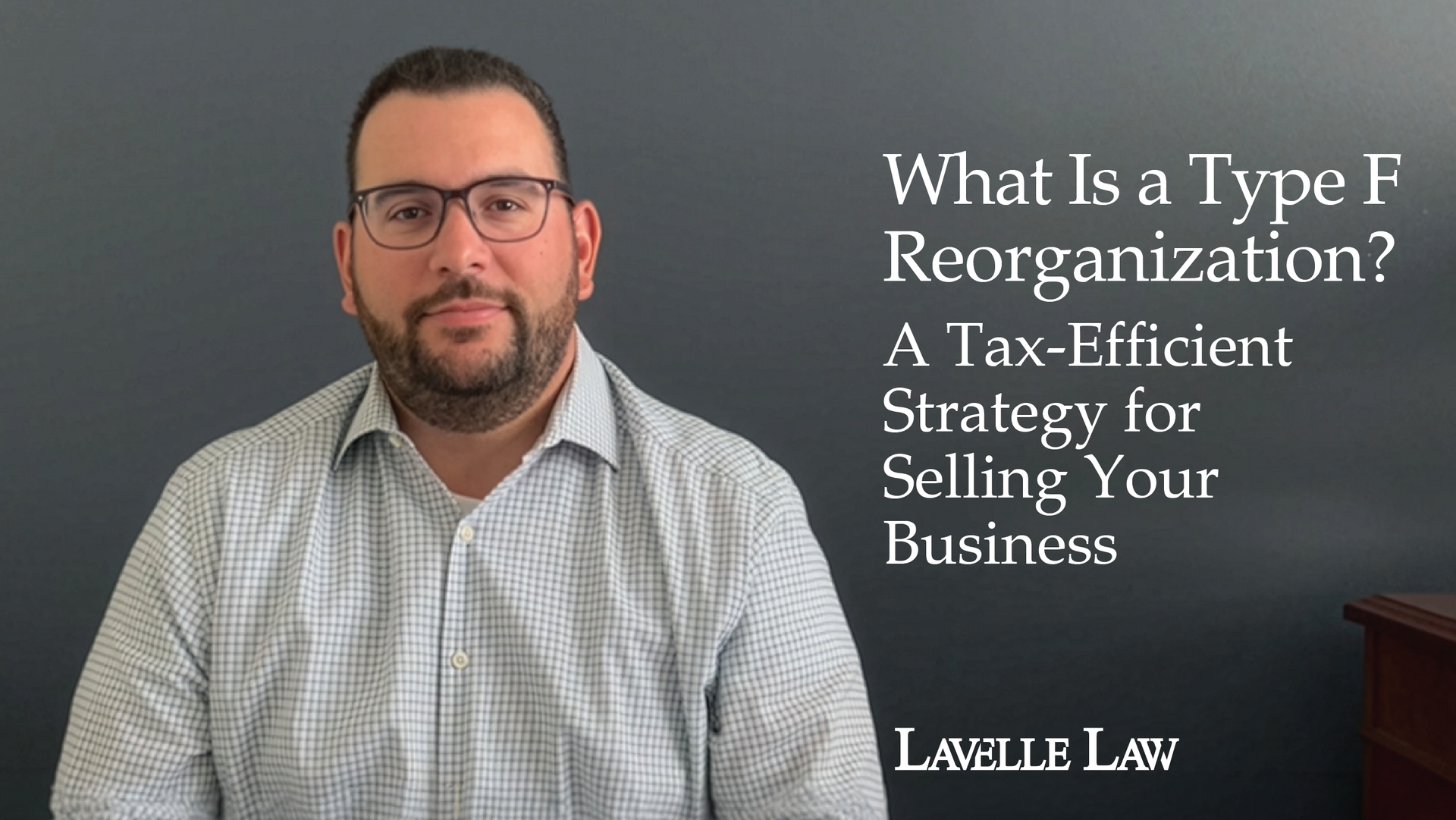
Thinking about selling your business? In this video, Lavelle Law attorney Frank Portera explains how a Type F Reorganization can create tax efficiencies and simplify the sale process by reducing the need for third-party consents.

Thinking about using AI to represent yourself in litigation? Think again. It is well-documented that pro se litigants are less likely to prevail compared to their represented counterparts. Regardless, AI has provided people with a false sense of security, tempting them to represent themselves regardless.